Case Study: LTE Network Troubleshooting & Provider Blocking Crisis
Managed Connectivity • Network Diagnostics
Strategic Summary: When an upstream provider began randomly blocking LTE routers, multiple client network infrastructures faced sudden, systematic failures. By implementing a rigorous diagnostic methodology and coordinating directly with provider engineering teams, Si Futures bypassed the blocking mechanisms and deployed a diversified, multi-provider network architecture that restored a 99.8% uptime baseline.
Challenge: Unpredictable Network Failures
Network connectivity failures during peak business operations create cascading problems across multiple organizational systems. When an upstream provider began randomly blocking LTE routers, client infrastructures faced systematic drops that directly threatened business continuity.
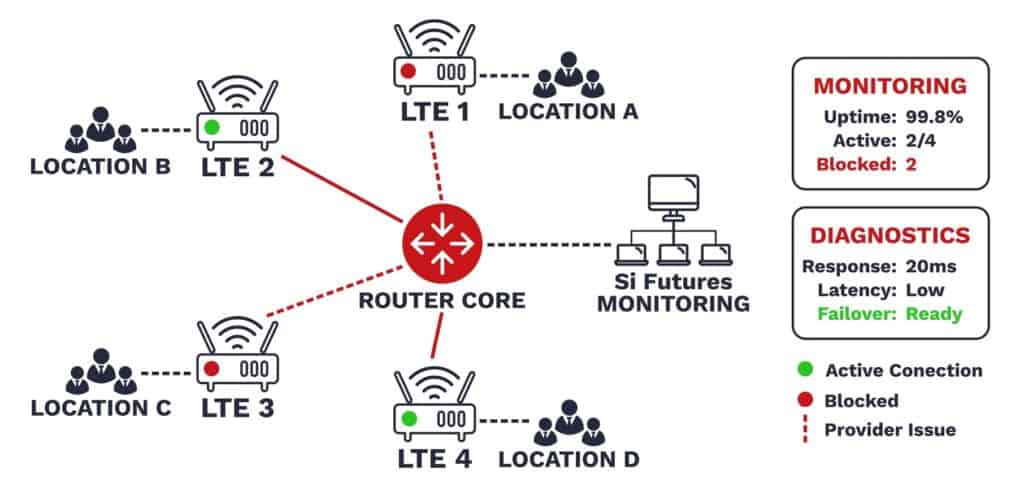
The technical challenge extended far beyond simple connectivity restoration. Random blocking patterns made troubleshooting particularly complex. Because there was no consistent pattern in affected router models or configurations, and blocks occurred without advance technical justification, traditional diagnostic tools could not isolate the initial triggers.
A Systematic Investigation Approach
Rather than implementing temporary, reactive fixes, we developed a deep root-cause investigation procedure:
- Network Traffic Analysis: Comprehensive examination of router communication packets to isolate specific blocking triggers.
- Provider Technical Coordination: Direct, backend engineering-level engagement with the provider’s team to identify unannounced policy changes.
- Impact Assessment: Systematic evaluation of affected client sites to prioritize high-severity dependencies.
The Solution: Immediate Protocols and Long-Term Architecture
Resolution required more than simple router replacement. Our immediate protocol involved an emergency router reconfiguration to bypass active blocking mechanisms while shifting critical business tools to backup links.
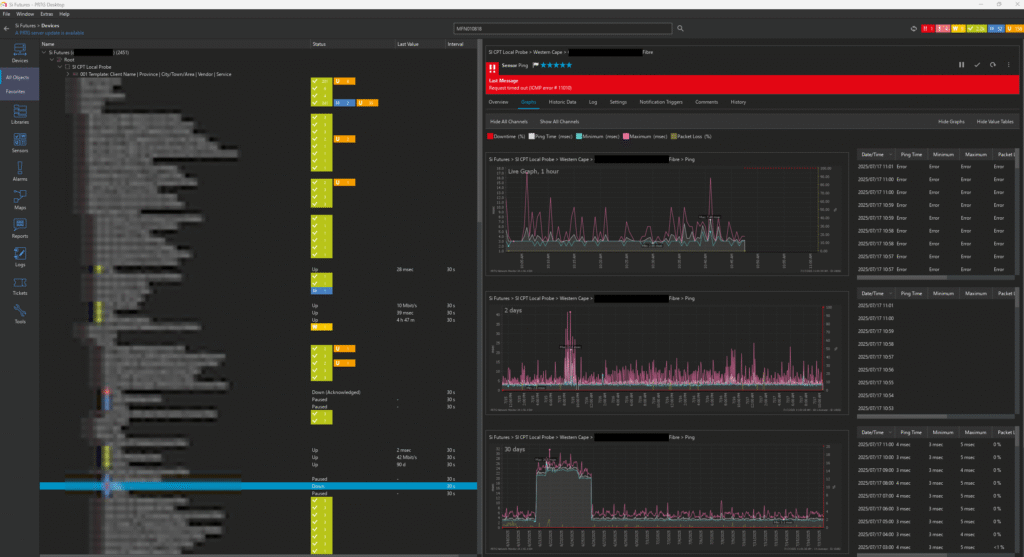
For long-term network optimization, we eliminated single-provider dependency entirely by deploying a diversified network architecture. Combined with enhanced monitoring platforms providing proactive early warning alerts, we implemented automated failover configurations. This ensures that if a single carrier drops or updates backend policies, routing shifts seamlessly without operational disruption.
Measurable Outcomes
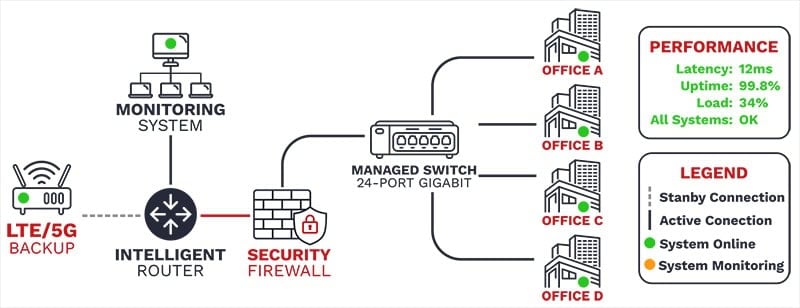
This business-aware approach yielded immediate technical improvements across all measured environments: a return to a sustained 99.8% network uptime baseline and a 75% reduction in total issue detection and resolution windows.
By leveraging our unified integrated connectivity and monitoring services, we eliminated the typical finger-pointing and delay tactics often associated with fragmented IT vendors. Our diagnostic documentation now serves as an operational template for rapid response to comparable infrastructure anomalies.
True resilience isn’t found in hoping a single carrier won’t fail—it’s built by designing a network architecture that assumes they will.