
When Proactive Delivery Earns the “What Else Can You Do?” Conversation
Service Management • Strategic Delivery
Strategic Summary: True corporate alignment rarely stems from high-level sales pitches or stylized contracts. Instead, it is built when an architecture team delivers complex infrastructure upgrades ahead of schedule without requiring client oversight. By migrating a client’s core visibility endpoints a full month early, Si Futures demonstrated structural reliability—shifting our position from an external vendor to an essential operational partner.
A mid-market enterprise had been waiting for the rollout of their centralized infrastructure tracking platform. The contractual deadline was locked for the end of February—a timeline that conventional suppliers would have fully utilized given the underlying complexities of telemetry integration. Monitoring migrations require structuring authentication profiles, configuring granular database connections, and mapping out executive dashboard arrays from scratch. Our engineering desk completed and deployed the entire system in January.
The newly engineered hub consolidated everything their software development leads needed into a single console: live database transaction response metrics, application layer insights, virtual machine statuses, and external web performance benchmarks. Instead of juggling multiple login credentials to cross-reference system events, their teams gained immediate visibility across their entire digital landscape.
Overcoming the Fatigue of Managed IT Delays
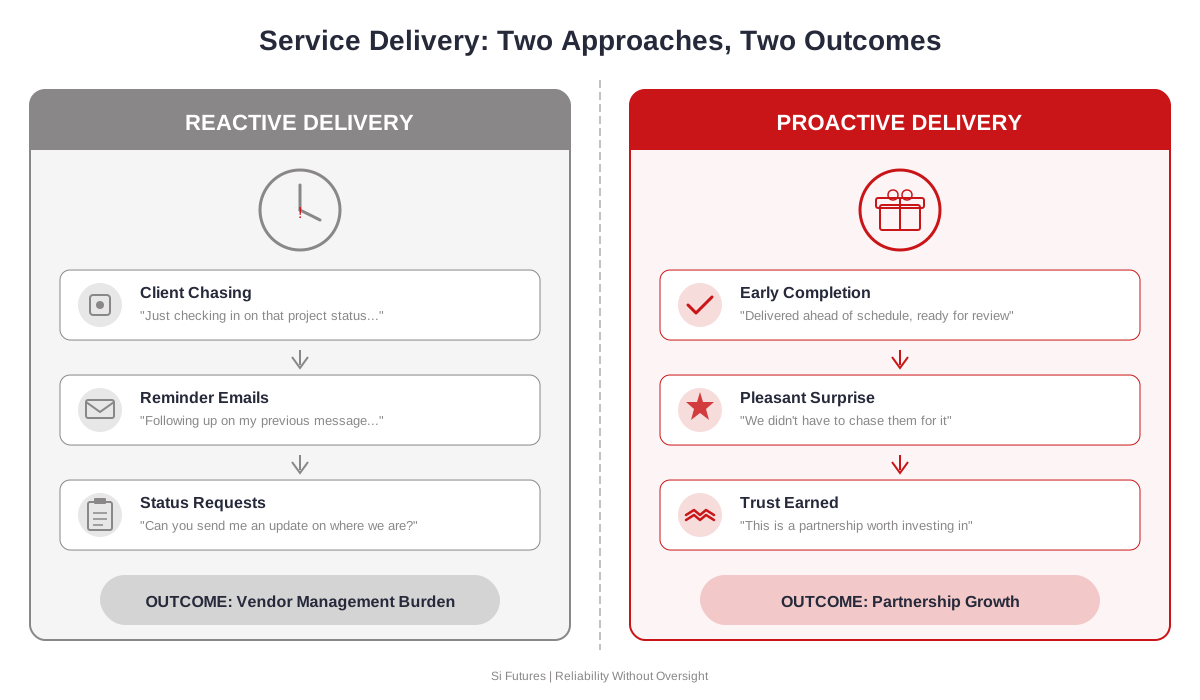
In modern enterprise procurement, corporate buyers are conditioned to expect project extensions. They routinely embed buffer windows into their internal roadmaps because past vendor interactions have trained them to expect missed deadlines or slow project updates. This friction places the burden of project management back onto the client’s internal managers.
When an MSP reverses this dynamic by delivering infrastructure changes early, the operational impact goes far beyond the software installation itself. It establishes an organizational benchmark for absolute reliability without client oversight. Our client’s engineering division went from navigating a complex cloud stack with restricted visibility to utilizing full monitoring and management through ManageEngine’s Site24x7 platform. They were highly impressed by the technical capabilities, but even more so by the fact that the upgrade arrived without them having to chase us for updates.
The Structural Shift from Supplier to Strategic Advisor
Shortly after the monitoring architecture went live, the client requested an in-person meeting at our corporate office. Rather than reviewing invoice line items or troubleshooting system alerts, the leadership team wanted to explore our broader capabilities to align more of their technology infrastructure with our operations group. They specifically sought to review additional managed service tiers because they wanted to deepen the partnership itself.
“Proactive delivery doesn’t just exceed expectations—it earns the conversations that transform vendors into partners.”
Every technology agreement gives an MSP a choice. You can fulfill the basic text of a statement of work, hit your dates exactly on the deadline, and meet your minimum legal obligations. Alternatively, you can actively protect the client’s timeline by turning complex deployments into a seamless operational success. Choosing proactive execution transforms your team from a transactional contractor that requires oversight into an indispensable corporate asset. This is the cornerstone of the proactive support infrastructure we deploy for every growing mid-market enterprise.
True operational partnership is built on delivering reliable technical performance before you are asked, not just when you are tracked.
