Building a Video Content Factory: Multi-Model AI Orchestration
Emerging Technology • AI Architecture
Strategic Summary: Most businesses view artificial intelligence as a single text box to query as needed. However, true operational leverage is achieved when independent models are orchestrated as specialized team members within a unified pipeline. By building a multi-agent video production engine, Si Futures demonstrates how automated critique and correction loops can accelerate content creation while preserving strategic human control.
The Architecture of Agent Specialization
At the center of this environment sits an intelligent orchestration layer. When a team member initiates a content project, they complete a targeted, six-question onboarding module mapping out core audience parameters and business objectives. From that point forward, the management layer automatically routes the project to optimized agent clusters:
- Research Engines: Tailored for data-heavy content, these models pull and synthesize information from verified web sources.
- Instructional Designers: Focused on educational material, these agents excel at breaking down complex technical topics into clear, progressive segments.
- Creative Writers: Engaged for promotional material, these models align script outputs with specific brand voice guidelines.
Automated Quality Assurance: Critics and Fixers
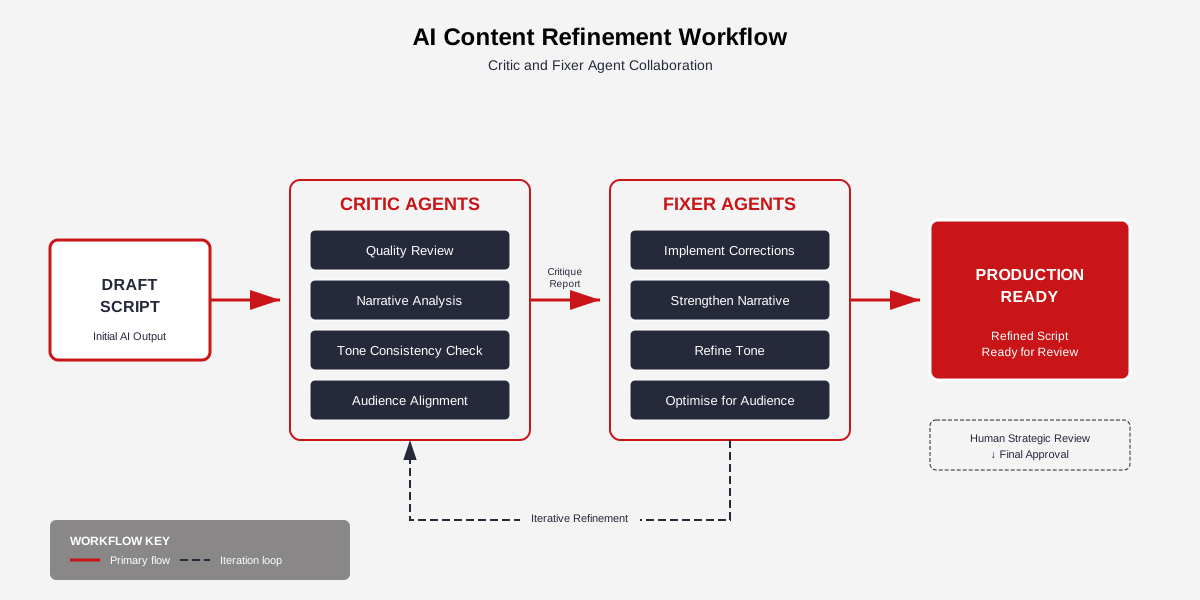
A key limitation of basic AI generation is that initial outputs rarely arrive production-ready. To solve this, we integrated separate adversarial agents into the workflow whose sole responsibility is strict copy editing and criticism. These critic agents evaluate draft scripts against hard quality standards—checking narrative structure, flagging pacing drops, identifying tonal inconsistencies, and highlighting any areas that might miss the target audience.
Once the audit completes, a separate cluster of fixer agents reviews the critique logs to implement corrections. This self-correcting cycle loops automatically, delivering a fully polished script without requiring manual human editing at every step. This shifts the team’s role from writing drafts to providing strategic direction and creative approvals.
Scaling Orchestration Beyond Creative Asset Pipelines
These same structural principles apply to any complex corporate workflow that relies on multiple distinct skill sets, including document reviews, cross-system log analysis, client support routing, and policy synthesis. By making this content factory accessible across our entire organization, an engineer in our support desk can submit a raw technical solution and quickly receive a polished educational script, completely removing traditional multimedia production bottlenecks.
“This is how we’re thinking about AI: not as a replacement for human judgment, but as an amplifier of human capacity.”
When evaluating AI solutions, the focus should shift away from searching for a single perfect model toward building an orchestration layer that effectively combines specialized strengths. Designing these automated pipelines is an essential component of managed IT strategy and planning services, transforming emerging technology into a distinct operational advantage.
Strategic AI adoption focuses on how systems cooperate, ensuring automated pipelines scale output while human oversight guides direction.