
Proactive Network Intelligence: How Advanced Monitoring Prevents Business Disruption
Infrastructure Operations • Predictive Telemetry
Strategic Summary: Relying on traditional alert parameters means your technical teams only engage after business operations suffer. By shifting from a reactive model to a distributed network intelligence matrix, Si Futures utilizes multi-cloud geographic probes and on-site client sensors to identify underlying performance degradation patterns—mitigating operational downtime before it hits your bottom line.
By the time a conventional reactive alarm fires, employee productivity has slumped, client transaction workflows are stalled, and revenue generation is compromised. Shifting this dynamic requires a total transformation in how infrastructure telemetry is gathered and parsed.
The Structural Shift: Reactive to Predictive Infrastructure Management
Standard infrastructure tracking follows a highly predictable, flawed loop: an endpoint sensor breaches a hard-coded technical capacity limit, an emergency notification is broadcast, and engineering teams scramble to execute damage control. This process monitors your architecture as a cost center to be patched rather than a dynamic pipeline to be protected.
Advanced proactive network tracking alters this blueprint completely. Rather than waiting for an interface or database link to drop entirely, intelligent telemetry engines analyze early indicators, historical trend baselines, and erratic behavior profiles across upstreams to predict and resolve failures early.
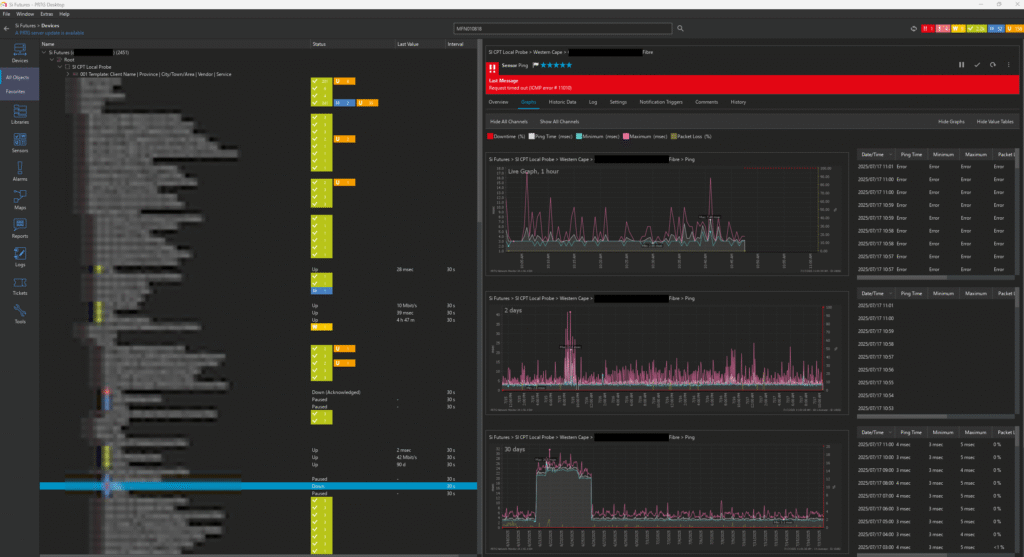
Four Pillars of Network Intelligence
True infrastructure intelligence operates across multiple layers simultaneously to protect operational integrity:
- Global Telemetry Integration: Leveraging distributed monitoring points across major public cloud providers (AWS, Azure) to capture upstream routing variations.
- On-Premises Sensor Placement: Positioning physical or virtual monitoring probes within your local networks to log the precise end-user experience.
- Business-Contextual Urgency: Adjusting alarm prioritization dynamically based on application importance and peak trading time blocks.
- Predictive Path Forecasting: Correlating historical capacity trends with real-time variables to scale infrastructure ahead of congestion points.
Data-Driven Cloud Placement Strategy
Deploying a distributed monitoring posture across global public cloud boundaries also offers powerful advantages for architecture planning. By gathering real-world latency, throughput data, and route continuity statistics across different cloud regions over months, we eliminate the guesswork from multi-region cloud migrations.
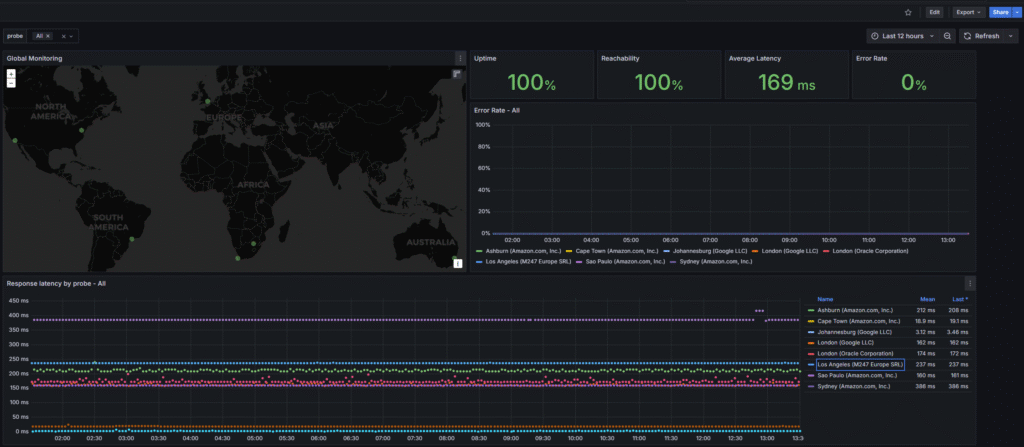
This empirical evidence ensures that international operational expansions are backed by hard performance data. Instead of selecting hosting infrastructure based on simple geographic proximity, organizations can position critical workloads within regions proven to deliver the highest performance stability for their remote facilities.
Strategic network engineering means matching infrastructure visibility directly with your business risk tolerance.
