We Used to Trust Our Gut on LTE. Now We Have the Data.
Managed Connectivity • Network Operations • IT Infrastructure
Strategic Summary: A simple up/down status indicator doesn’t guarantee a backup link will work when primary fibre fails. Nicholas Broderick explains how Si Futures implemented GenieACS and the TR-069 protocol to pull real-time LTE signal telemetry from ZTE devices into the Trusted Response Centre™ dashboard—replacing guesswork with data-driven network management.
Until recently, assessing that difference required an engineer to be on site, test the device manually, and rely on experience to judge the quality of the installation. That experience is valuable—but gut feel is not a monitoring strategy.
Being Online Is Not the Same as Being Reliable
LTE has become an increasingly critical component of our managed connectivity service architecture.
It serves as secondary failover when primary fibre links fail, as the primary connection for remote or temporary sites, and as an immediate alternative where fibre installation is impractical or delayed. As our volume of managed LTE endpoints has grown, so has the necessity for deeper signal visibility.
LTE performance is heavily influenced by physical device placement, structural building materials, RF interference, cellular tower congestion, and shifting carrier conditions. A connection that tested well during initial deployment may deliver degraded performance six months later.
A basic ping or monitoring dashboard shows whether a device is reachable. It cannot tell you if the signal strength, stability, and carrier noise ratio are sufficient to carry enterprise traffic during a fibre outage.
For true reliability, an up-or-down status indicator is not enough. You need continuous, granular signal telemetry.
Bringing LTE Signal Data Into Our Monitoring Environment
To elevate LTE monitoring, we implemented GenieACS across our managed ZTE hardware stack.
Utilizing the TR-069 (CWMP) device management protocol, our deployed hardware reports telemetry back to our central environment at scheduled intervals. This grants our NOC direct access to Signal-to-Noise Ratios (SINR), Received Signal Strength Indicators (RSSI), and real-world performance metrics.
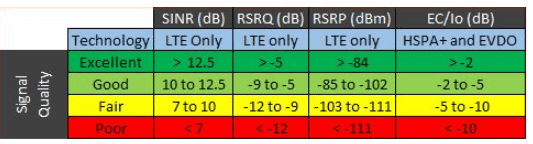
Figure 1: Granular LTE signal telemetry capturing Real-time SINR, RSRP, and RSSI metrics within our monitoring environment.
How Telemetry Transforms Managed LTE
- Faster Troubleshooting: Instantly isolate whether issues stem from local hardware placement, environmental changes, or carrier tower congestion.
- Baselined Deployments: Establish performance baselines during installation to detect degradation long before primary link failover occurs.
- Proactive Remediation: Identify marginal sites that require antenna repositioning or carrier escalation before end users experience slowness.
Managed Connectivity Intelligence
Giving cellular links the exact same operational focus as primary enterprise fibre:
- Parity for Secondary Links: Detailed telemetry has long been standard for leased lines and enterprise fibre. Secondary wireless connections deserve the exact same visibility.
- Continuous Evidence: Whether serving as a primary link or critical failover, LTE requires active management backed by continuous metrics rather than passive green indicators.