When Partnership Quality Becomes Your Best Business Development Strategy
Business Strategy • Client Success
Strategic Summary: The most effective growth engine isn’t a marketing campaign—it is the compound effect of consistent excellence. When IT moves from a source of friction to a “quiet enabler,” trust transfers directly from client to peer, generating high-value referrals that you never have to chase.
When Trust Turns Into Referrals
There is a moment in every long-term partnership where support tickets evolve into strategic conversations. Recently, the IT Manager of a long-standing logistics partner reached out with a simple message: he had spoken to another business facing an Office 365 compromise, explained our approach, and told them we’d be in contact. No sales pitch required—just trust, transferred directly.
This logistics firm initially came to us with a patchwork of inherited systems and zero integration. By rebuilding their environment—Office 365 migration, identity foundations, and structured governance—we made IT “invisible” in the best possible sense. As the client noted: “IT is no longer a problem for us.”
The Partnership Model vs. The MSP Model
Traditional MSPs treat clients as revenue lines. The partnership model works differently because it is built on three pillars:
- Education: Empowering clients to explain security configurations to their own boards.
- Shared Success: Investing in the client’s operational goals as if they were our own.
- Transferred Credibility: One successful environment becomes the blueprint for an entire portfolio.
Excellence Compounds
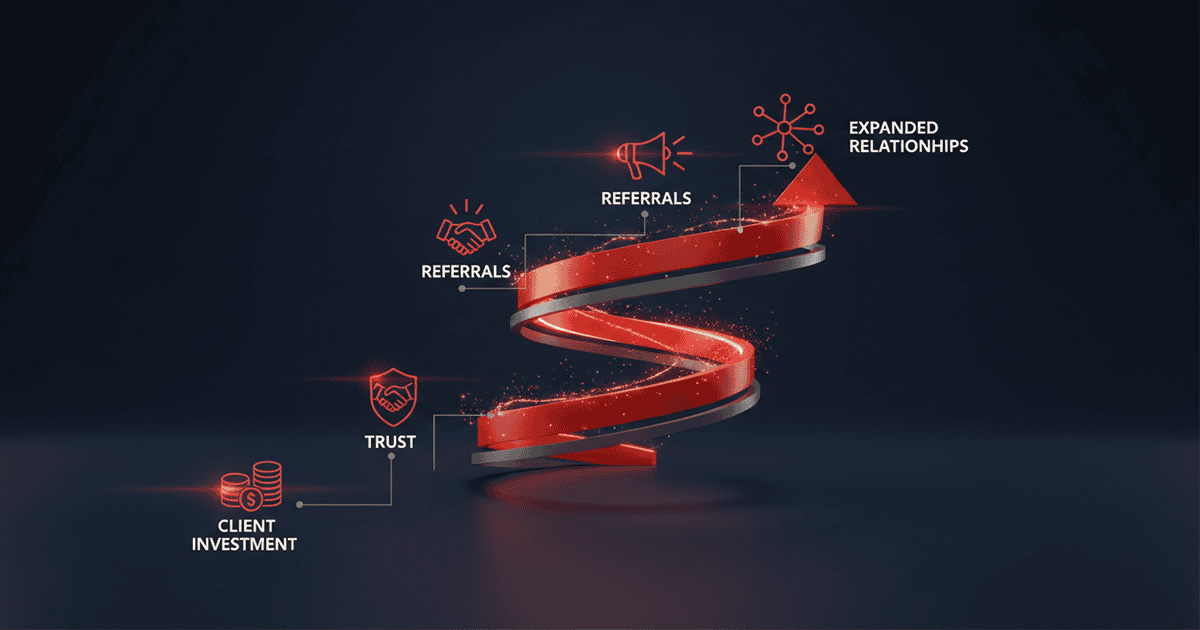
Business development doesn’t always flow through a funnel. It often comes from quietly doing excellent work for the clients you already have. When we recently assessed a partner business within this logistics group, we found the classic gaps: IMAP/POP email risks, unclear backups, and non-redundant connectivity. Because of the established trust, the scope wasn’t questioned—it was welcomed.
When you invest in your client’s success as genuinely as your own, growth becomes something that happens rather than something you do.