
When Your MSP Catches What Your Carrier Missed: Handover Documentation Failures
Network Architecture • Carrier Accountability
Strategic Summary: Relying blindly on telecom provider delivery sheets can leave your enterprise network vulnerable to hidden configuration errors. Following a fiber line installation, our engineering desk noticed unexplained packet drops across the client’s trunk lines. A thorough audit revealed the carrier had handed over incorrect gateway IPs, mislabeling an active microwave link as the primary fiber line. Auditing these provisioning discrepancies protected both network performance and contract billing.
The client’s corporate office had transitioned from a standard LTE backup network to a high-capacity fiber line. On paper, it was a standard provisioning changeover. However, our specialized connectivity monitoring platform immediately flagged erratic packet loss across the new line. The fiber circuit was actually showing more latency than the old LTE layout—a clear indicator of a configuration issue.
Uncovering the Carrier Configuration Trap
Our engineering group audited the initial handover documents, which contained the routing IP allocations and gateway configurations used to map out the network monitor. While standard IT desks trust these vendor delivery sheets implicitly, cross-referencing the live routing paths revealed a major discrepancy.
The gateway IP provided by the carrier did not connect to the primary fiber trunk at all. Instead, it routed to a legacy microwave backup service, meaning our monitoring tool was tracking an entirely different connection. The paperwork contained three separate errors: it listed an incorrect gateway IP, included an outdated LTE service tag, and provided a broken line serial code. Each of these errors misdirected our monitoring tools away from the fiber line.
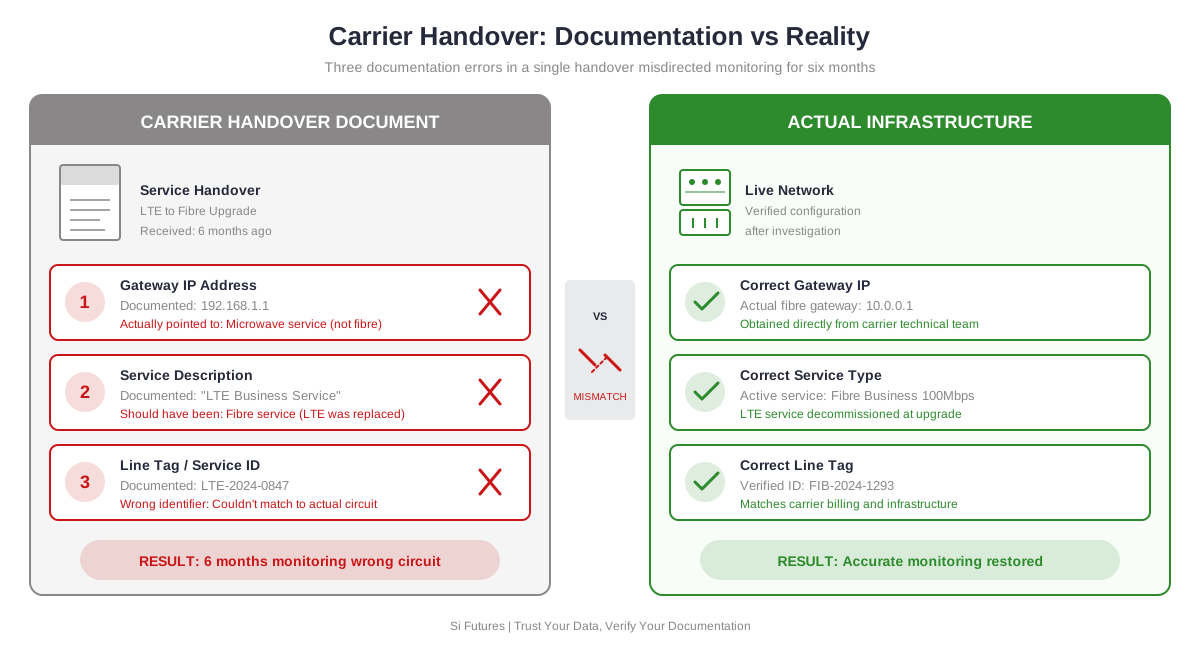
Systematic Verification and Financial Reconciliation
The carrier’s helpdesk wasn’t ignoring the issue intentionally. When we logged the initial packet drops, their support staff checked the fiber line’s actual IP address rather than the mislabeled gateway IP provided on our handover sheet. Because both teams were analyzing completely different routing paths, the carrier couldn’t see the errors embedded in their own paperwork.
Once we pulled the true IP data directly from their core engineering team, we corrected the monitoring fields. This revealed that the packet drops weren’t isolated to a single line; both circuits were experiencing configuration issues. Fixing this tracking alignment protected more than just network performance—it allowed us to audit the carrier’s monthly invoices through our proactive monitoring and verification workflows, ensuring the client only paid for active, properly configured links.
“Trust your monitoring data over carrier assurances. When the numbers don’t match the narrative, the documentation is usually the problem.”
Every enterprise network upgrade should treat carrier handover sheets as documents that require independent verification rather than absolute facts. IP targets, line tags, and routing paths must be audited against your live hardware before monitoring goes live. Skipping this step leaves you exposed to broken monitoring metrics and unbacked SLA claims on lines you are paying to maintain.
Strategic connectivity management requires independent verification of your routing paths, not just accepting carrier templates.
