Data Protection Excellence: Systematic Recovery from Synchronisation Corruption
Cloud Architecture • Data Resilience
Strategic Summary: Modern cloud synchronisation can become a liability when rapid file changes occur across multiple endpoints simultaneously. This case study explores how a methodical recovery process and granular backup architecture resolved widespread corruption triggered by a multi-device synchronisation conflict.
The Hidden Risk of Multi-Device Synchronisation
A recent incident involving Apple Migration Assistant demonstrates a critical vulnerability: when files are transferred between devices without logging out of synchronisation services, engines like OneDrive can become confused by near-simultaneous updates. In this case, rapid updates created within milliseconds of each other resulted in widespread corruption across critical finance and contract directories.

Why Automated Detection Falls Short
Identifying corruption in large SharePoint environments requires a methodical manual approach. Automated tools often fail because preview functionality may work even for corrupted files. Effective assessment demands:
- Directory-by-directory review and manual file verification.
- Timestamp analysis to correlate corruption patterns with sync events.
- Prioritisation of critical assets, such as Master Service Agreements (MSAs) and finance records.
The Power of Granular Backup Architecture
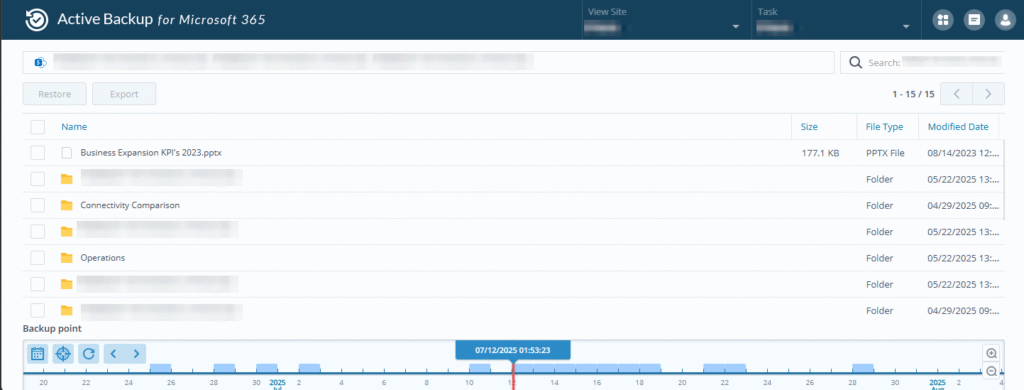
Our Johannesburg-based Synology backup system provided the “infinite timeline” required to resolve this crisis. By offering incremental backups with precise modification timestamps, we could perform exact point-in-time restorations for individual files without overwriting legitimate recent work.
Strategic Recovery Methodology
Recovery is a balancing act. Because team members continued working after the corruption occurred, a blanket restoration was impossible. We prioritised selective recovery, validating the integrity of historical versions before manually uploading files where permission conflicts existed. This ensured business continuity without losing hours of productive output.
Systematic recovery transforms potential disasters into manageable operations.