BGP Asymmetry Case Study: Resolving E-Commerce Failover Bottlenecks
Managed Networks • BGP Routing Forensic
Strategic Summary: When a primary fiber link dropped at a retail client’s Johannesburg DC, their e-commerce environment suffered severe packet loss and backup circuit saturation. A systematic post-incident investigation by Si Futures revealed that independent cross-router configurations were inducing global BGP routing asymmetry—splitting internet traffic flows across dead and live circuits simultaneously during failovers.
The Challenge: Latent Architectural Failures Triggered by Outages
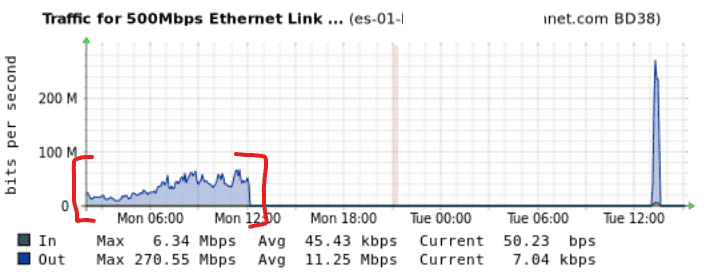
When primary IP Transit (IPT) pipelines experience a clean physical break, automatic failover configurations should immediately protect transactional application paths. However, during a 19-hour fiber outage at this retail client’s Johannesburg facility, their backup systems buckled under severe degradation that basic circuit capacity limits could not account for.
The resulting network instability triggered immediate packet loss, saturated alternative wireless links, and placed revenue-critical e-commerce operations at intense operational risk.
Forensic Discovery & Routing Asymmetry
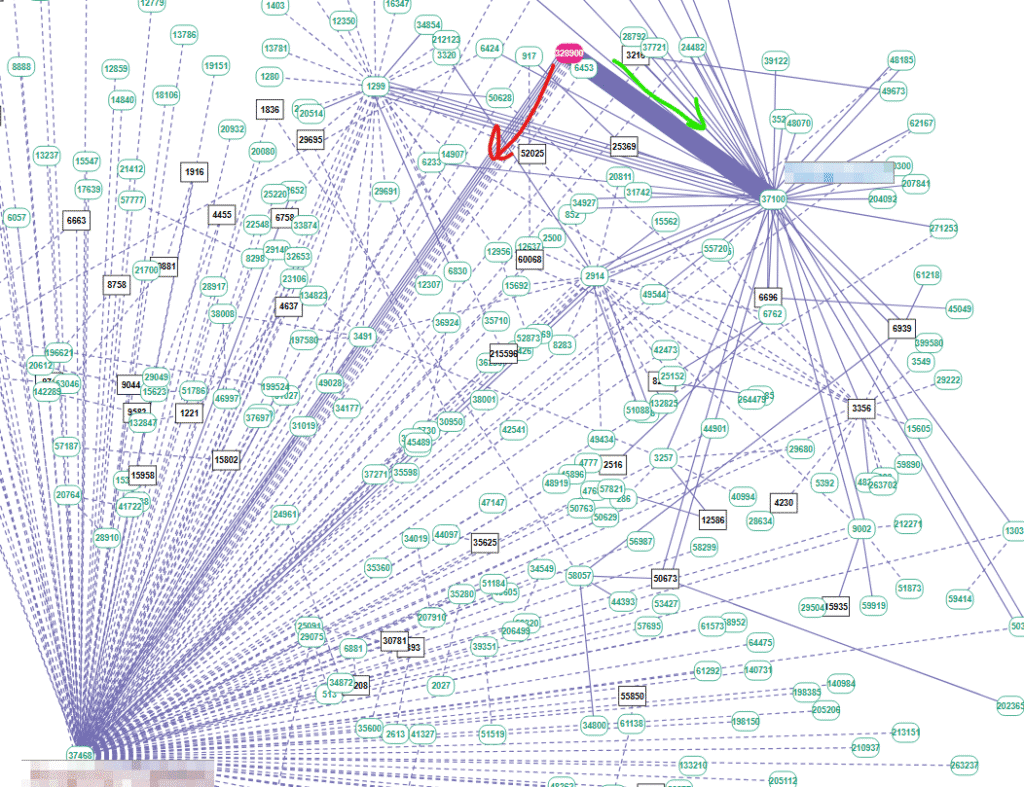
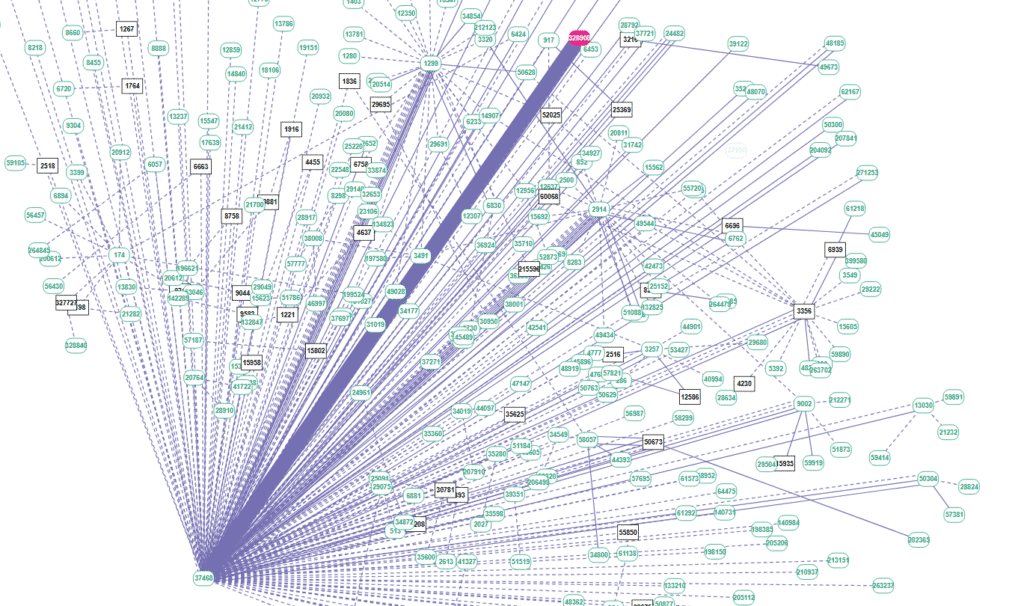
Using RIPE’s BGPlay tool to replay global internet routing announcements alongside traffic topology graphs, our core infrastructure engineers exposed critical structural anomalies:
- Dual Prefix Advertisement: Even with the primary link down, Router 1 continued advertising the client’s public prefix over wireless to the primary carrier, while Router 2 simultaneously broadcasted to the secondary carrier.
- Global Traffic Splitting: This configuration split internet response vectors roughly 70/30 across the providers, sending inbound packets crashing back into a non-functional path.
- Zero Cross-Router Visibility: Boundary routers were patched directly without intermediate switching clusters, running independent IP SLA tracking metrics that prevented coordinated failover visibility.
The Solution: Restoring Deterministic BGP Routing Logic
Remediation demanded structural logic optimization rather than simple hardware replacements. We re-engineered the client’s internal BGP advertisement logic to ensure zero simultaneous dual-path prefix announcements during active carrier drops, while adding hardware architecture changes to establish unified cross-router status awareness.
Concurrently, we tightened environmental visibility. We dropped standard Network Management System (NMS) packet-loss alert thresholds from a loose 15% over 5 minutes down to an aggressive 2% within 1 minute across all data center loops. To prove the efficacy of the new routing logic, our team executed rigorous real-world load testing using iPerf at a sustained 300Mbps injection benchmark.
Measurable Strategic Outcomes
The post-incident architecture upgrades delivered definitive protection parameters for the client’s e-commerce workflows. Rapid ping test volumes running 5,000 continuous bursts validated complete network path tracking with 0.0% packet drop margins under operational load.
By relying on systematic data correlation over reactive assumptions, this deployment has integrated comprehensive enterprise network resilience across the client’s digital landscape. Coordinated failover protocols now ensure that backup channels remain fully scalable, keeping transaction pathways safe and responsive during downstream emergencies.
True network availability isn’t guaranteed by signing backup lines—it is won by making sure those backup paths have the correct routing logic to receive the traffic.