Freight Forwarder Cuts Network Costs by 50% While Tripling Performance
Customer Stories • SD-WAN Transformation
Strategic Summary: An established freight forwarding company found its aging legacy MPLS lines transforming into an active business operational liability. With applications crawling during peak supply chain windows, Si Futures stepped in to design a Secure Hybrid WAN architecture. The engineering overhaul achieved a 50% drop in infrastructure costs while simultaneously tripling total bandwidth capacity and bulletproofing client transaction systems.
The Breaking Point: High Overheads, Low Visibility
The global logistics space operates entirely on real-time data flows, instantaneous electronic custom clearances, and tight delivery turnarounds. When network systems lag, shipments stall at ports, clients lose tracking updates, and hard-earned enterprise relationships erode. For this mid-market logistics firm, recurring connection drops and peak-hour infrastructure slowdowns were bringing daily operational efficiency to a standstill.
Compounding the performance shortfalls was the legacy telecom provider’s pricing. The client was paying premium, enterprise-tier prices for an inflexible, archaic MPLS configuration. Incremental troubleshooting options offered by the carrier provided no roadmap for scale—relying instead on boilerplate upgrade fees that added cost without fixing underlying structural constraints.

Engineering an SME-Friendly Hybrid Architecture
Rather than performing a basic piece-by-piece upgrade, our team designed a Secure Hybrid WAN framework tailored to deliver enterprise capabilities at SME budget metrics:
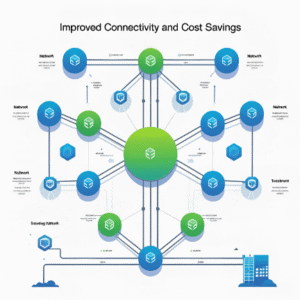
- Intelligent SD-WAN Overlays: Dynamically monitoring and prioritizing high-priority tracking applications and client traffic flows.
- Automated Redundant Circuits: Establishing instant sub-second failovers to completely insulate the business from carrier downtime drops.
- Next-Gen Security Integration: Deploying managed FortiGate firewalls paired with deep FortiGuard threat prevention matrices.
The Business Transformation and Strategic ROI
The solution completely alleviated pressure on the internal IT group. Instead of spending hours hunting down line degradation and playing phone tag with telco support staff, engineers could comfortably offload day-to-day operations to our dedicated Trusted Response Centre support team.
Six months following deployment, application reactivity stabilized to match peak freight volumes. Bandwidth limits were effectively tripled without altering the baseline telecom spend. Furthermore, because our infrastructure alignment models assume an ongoing collaborative partnership rather than isolated ticket closing, we have already identified a further 20% reduction parameter across their remote hosting environments.

“We now have a faster, more secure, and more resilient network that actually enables growth rather than limiting it. Our IT team can finally focus on projects that move the business forward, and we have a partner who understands that in logistics, every minute of downtime costs us more than money—it costs us client trust.”
True network transformation isn’t measured simply by line latency—it is validated by how effectively it frees up resource overhead to grow your business.