
When a Client Asks You to Register 250 Domains, the Right Answer Is Not Always Yes
Brand Protection Architecture • Domain Governance
Strategic Summary: When a major investment management firm requested the manual acquisition of 250 descriptive domain variants to shield their brand, standard vendor logic would dictate executing the order immediately. Si Futures chose a more advisory path. Recognizing that manual registration leaves gaping holes for attackers, we collaborated with specialized brand registrars to replace a costly list of individual domains with comprehensive global trademark blocks.
The Vulnerability Hidden Within Manual Fencing
The client’s underlying concern was entirely valid. As a high-tier asset manager, their brand identity attracts malicious lookalikes. Having already encountered an international copycat operating under a nearly identical name, corporate leadership felt exposed. In response, they attempted to build a manual perimeter by purchasing every geographical variation they could think of—such as appending regional indicators to their main address.
While this defense strategy is a common instinct, it contains major gaps. Owning an elongated long-form country variant provides no legal or technical protection if a malicious actor registers shorter variations or uses newer top-level extensions (TLDs). The perimeter remains open, and advanced attackers will focus precisely on those uncovered openings. Recognizing these flaws, we brought specialized domain partner LexSynergy to the table to build an enterprise governance framework.
Transitioning to Global Trademark Blocks
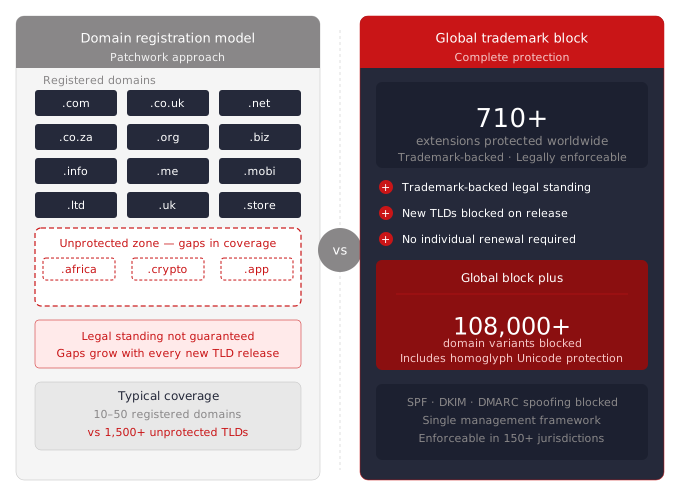
This collaborative engineering session shifted the client’s strategy entirely. Rather than acquiring a fragmented list of individual web names, the focus turned to deploying structural global domain blocks. This approach secures identity parameters directly at the registry root level:
- Registry Root Protection: Instead of buying individual names one by one, a global block uses verified trademark records to prevent specified identity variants from being registered by anyone else across up to 710 global extensions.
- Eliminating Extension Overhead: This protection covers emerging spaces like .app, .dev, or .crypto. The registry automatically blocks these setups from being created in the background, eliminating ongoing renewal fees.
- Legal Enforcement Standing: Swapping out loose long-form names for core trademark blocks gives legal teams genuine leverage to challenge and shut down malicious lookalikes instantly.
Neutralising Advanced Homoglyph Intrusions
The most critical security vulnerability addressed during our review with corporate legal counsel was the threat of homoglyph spoofing attacks:
- Unicode Manipulation: Attackers can register domains that appear identical to the human eye but use matching characters from Cyrillic or Greek character sets, changing the underlying machine code.
- Bypassing Traditional Email Authentication: Because these malicious domains are technically unique registrations, attackers can configure valid SPF, DKIM, and DMARC parameters. Phishing emails sent from them bypass standard spam filters cleanly.
- Global Block Plus Solution: Upgrading the defense strategy to an advanced block system expands protection across more than 108,000 algorithmic permutations, neutralizing subtle character shifts before they can be weaponized against institutional investors.
Advisory Value Over Asset Accumulation
The instinct to continuously buy up neighboring domain variants is common among established mid-market enterprises. While securing obvious typo variations is a sound practice, modern brand protection requires an integrated approach. True digital security does not depend on the number of domains you own; it depends on whether your structural perimeters hold up legally, technically, and commercially during an active spoofing incident.
“We brought a specialist to the table rather than executing the instruction we were given. The client’s lawyers agreed it was the right call. That’s the kind of advisory value that matters — not the number of domains registered.”
Evaluating these subtle, high-impact threat profiles is an important component of a comprehensive threat readiness assessment. Transitioning away from organic, unmanaged asset lists to an unified risk framework allows corporate steering committees to close perimeter vulnerabilities and safeguard long-term brand equity.
Strategic brand defense means looking past manual registrations to leverage structural registry blocks that secure corporate identity parameter footprints.
